A hot-fire test anomaly involving Blue Origin's New Glenn vehicle on May 28, 2026 has materially altered the near-term commercial launch cadence at Cape Canaveral and the associated airspace activation pattern. The incident, which occurred during a static engine test at Launch Complex 36, resulted in significant structural damage to the pad and surrounding ground systems. FlySafe analysis shows that the resulting schedule disruption will reshape NOTAM frequency in the Jacksonville Flight Information Region (KZJX) and the offshore Miami Oceanic FIR sectors that border the Eastern Range, while simultaneously concentrating future payload manifests onto a smaller number of active heavy-lift providers.
The following bulletin reviews what is publicly known about the event, the operational consequences for commercial space access, and the practical implications for civil aviation operators who routinely encounter Eastern Range launch activations.
Event Summary and Confirmed Facts
According to reporting from Reuters, the anomaly occurred during a planned engine test fire ahead of New Glenn's first mission for the Amazon Leo broadband constellation. Blue Origin confirmed via its official statement that all personnel were accounted for and safe. Founder Jeff Bezos stated publicly that "it's too early to know the root cause but we're already working to find it" and that the company will "rebuild whatever needs rebuilding and get back to flying."
As reported by Via Satellite, because the event occurred during a test activity rather than a licensed launch operation, it does not fall within the scope of FAA launch licensing and therefore does not automatically trigger an FAA mishap investigation under launch regulations. Initial FAA airspace notices had indicated a possible launch attempt as early as June 2 had the static fire concluded successfully.
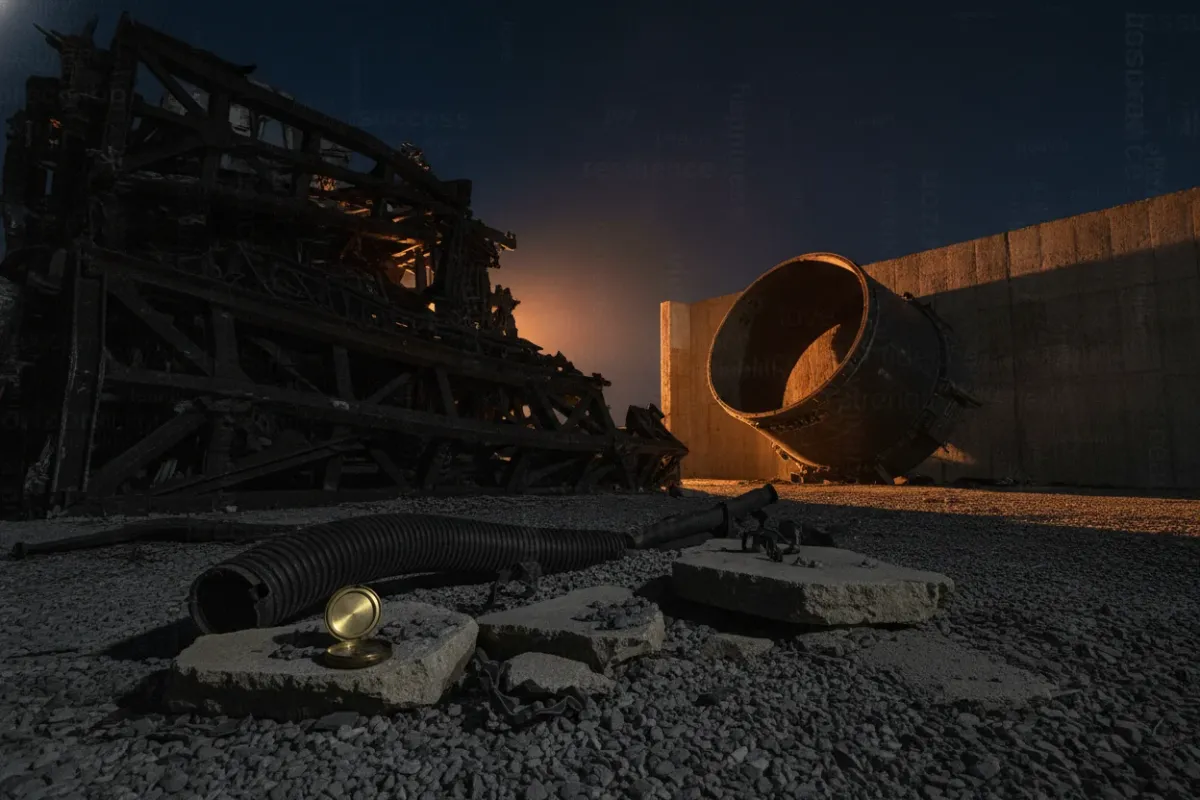
Imagery published in the days following the event shows extensive damage to the pad structure and to the lightning protection tower. Independent infrastructure assessments referenced in open reporting suggest that, in a worst-case scenario, restoration of the pad could extend beyond twelve months, although Blue Origin has not issued a public timeline.
Airspace Status and NOTAM Implications
Airspace status: Cape Canaveral launch operations are coordinated through the Eastern Range and routinely require activation of warning areas and temporary flight restrictions spanning portions of the Jacksonville FIR (KZJX) and the Miami Oceanic FIR (KZMA). Each New Glenn launch attempt typically results in a NOTAM-published hazard area covering the downrange corridor, which affects North Atlantic transit traffic, Caribbean-bound routes, and general aviation along the Florida east coast.
Affected routes: Routine New Glenn launch windows had been scheduled to support the Amazon Leo deployment campaign. With the pad now out of service, the frequency of associated TFR activations from LC-36 is expected to decrease substantially over the coming months. Operators flying segments of L455, A555, and offshore Bahamas routings should anticipate fewer Blue Origin-related airspace activations, but no reduction in the overall Eastern Range NOTAM volume, as SpaceX and United Launch Alliance schedules are likely to absorb manifest capacity.
Recommendation: Flight planners should continue to monitor FAA NOTAM Search and Eastern Range scheduling bulletins. The temporary reduction in New Glenn launch activity should not be interpreted as a broader reduction in Cape Canaveral operations. Conversely, increased SpaceX launch cadence may produce more frequent, shorter-duration TFRs in adjacent sectors.
Based on publicly available NOTAMs and historical activation patterns, the displaced manifest pressure is likely to translate into denser SpaceX operations from LC-39A and SLC-40, with potential second-order effects on civil traffic deconfliction in the Daytona and Melbourne approach environments.
Impact on the Commercial Heavy-Lift Ecosystem
New Glenn had only recently begun to demonstrate operational maturity. Of three launches conducted to date, only one was characterized as fully successful; on the most recent prior mission, the upper stage failed to deliver its payload into the intended orbit. The vehicle had also begun recovering its first stage on offshore drone ships, an operational milestone that mirrored the booster recovery cadence pioneered by SpaceX.
The loss of pad availability removes the only operational New Glenn launch site from active service. Customers affected by the schedule disruption include Amazon's Project Kuiper / Amazon Leo constellation, AST SpaceMobile, NASA science and exploration payloads, and U.S. Space Force national security missions that had been progressing toward certification under the National Security Space Launch program. As reported by Reuters, the U.S. Space Force and the National Reconnaissance Office both publicly reaffirmed their commitment to Blue Origin notwithstanding the incident, citing the strategic need for a multi-provider launch ecosystem.
Mark Boggett, CEO of Seraphim Space, was quoted as noting that the market "still needs viable alternatives" and that the situation "strengthens SpaceX's position at the margin, but doesn't change the broader trajectory toward a multi-provider ecosystem."
Consequences for NASA's Lunar Program
New Glenn occupies a critical position in NASA's Artemis architecture. As discussed in The Conversation, Blue Origin's Blue Moon lunar lander is dependent on New Glenn for transport to Earth orbit, and SpaceX's lander program — based on the Starship vehicle — has also experienced developmental delays. With both lunar lander providers facing schedule pressure simultaneously, the timeline for crewed lunar surface operations becomes more constrained.
From an airspace perspective, the Artemis program drives periodic activation of launch hazard areas at LC-39B and, prospectively, at LC-36. A delay in lander readiness does not immediately reduce Eastern Range airspace activity, but it does redistribute the cadence of high-altitude trajectory NOTAMs across calendar quarters.
Operational Considerations for Civil Aviation
Several practical considerations apply to operators in the affected airspace region:
- Pre-flight planning. Operators with routes that traverse the Florida east coast or the offshore Bahamas sectors should continue to brief Eastern Range schedules. While New Glenn activations are paused, SpaceX activations at LC-39A, SLC-40, and the Starbase-related Atlantic trajectory windows remain frequent.
- Reroute capacity. Airlines have rerouted around Eastern Range hazard windows for years; established lateral and vertical avoidance procedures remain effective. The reduced New Glenn activation rate may provide modest scheduling relief for routes that previously deconflicted around LC-36 hazard windows.
- Reserve fuel planning. Static fire anomalies do not produce hazard areas of the same scale as a launch, but they can result in short-notice ground emergency response activations on adjacent military and civil airfields. Operators arriving into KMCO, KMLB, or KTIX should continue to plan reserves consistent with the possibility of brief, localized hold instructions.
- Notification monitoring. Subscribe to Eastern Range public schedule feeds and review daily NOTAMs at the pre-flight stage. Static fire activities, although not licensed launches, can still result in airspace advisories.
Schedule Recovery and Infrastructure Outlook
Public estimates of pad recovery time vary widely. Some independent infrastructure observers, as referenced in open reporting, have suggested that rebuilding to flight-ready status could take "just over a year" in the worst case, while Blue Origin has not endorsed a specific timeline. Recovery activity is expected to focus on structural steel replacement, lightning protection tower reconstruction, propellant ground support equipment renewal, and avionics and umbilical replacement.
Industry context on launch pad reconstruction is provided in analysis from Burns & McDonnell, which notes that the upcoming NFP 461 fire protection standard for spaceports will play a significant role upon its 2026 release. Pad reconstruction projects increasingly involve modern code compliance considerations that did not apply to the original facility build.
Key Takeaways
- The May 28, 2026 hot-fire anomaly at LC-36 has removed Blue Origin's only New Glenn-capable pad from active service for an indeterminate period likely measured in months.
- The event is not subject to FAA launch mishap investigation procedures because it occurred during a test activity, not a licensed launch.
- Commercial customers including Amazon Leo, AST SpaceMobile, NASA, and Space Force payloads will experience schedule slippage, with manifest pressure redistributing toward SpaceX and other providers.
- Airspace activation frequency from LC-36 will decline temporarily, while overall Eastern Range NOTAM volume is likely to remain stable or increase as competing providers absorb capacity.
- NASA's Artemis lunar lander timeline becomes more sensitive to single-provider risk, with both lander development paths now experiencing concurrent schedule pressure.
Frequently Asked Questions
How long could the launch pad repairs take?
Public estimates range from several months to over a year. Blue Origin has not issued a formal timeline. Comparable industry experience suggests that severe pad damage involving structural steel and ground support equipment typically requires nine to eighteen months of reconstruction work depending on the scope of code compliance upgrades applied during rebuild.
Will this ground other rockets that share engine components?
Until a root cause is publicly identified, no determination can be made about cross-fleet engine implications. Analysis based on publicly available data only. Operators of vehicles using related propulsion components are expected to await Blue Origin's investigation findings before adjusting their own qualification status.
Does this affect NASA's lunar lander schedule?
NASA has contracted two providers for crewed lunar landing services. With both providers facing concurrent schedule pressure, the overall Artemis surface mission timeline is exposed to single-point delays. NASA has not publicly revised its schedule in response to the May 28 event.
Will SpaceX launch cadence increase as a result?
Commercial customers with time-sensitive payloads may seek to remanifest onto alternative providers, including SpaceX. Any resulting cadence increase would be reflected in Eastern Range scheduling bulletins and FAA airspace notices over the coming months.
Analysis based on publicly available data only. FlySafe Research monitors NOTAMs, airspace activations, and commercial launch schedule disruptions globally, providing aviation operators with operational intelligence drawn exclusively from open, independently verifiable sources. For continued coverage of Eastern Range and global launch-related airspace impacts, consult FlySafe operational bulletins.
- The May 28, 2026 static fire anomaly at Launch Complex 36 caused significant structural damage to the pad, with independent assessments suggesting restoration could take over twelve months — though Blue Origin has issued no official timeline.
- Because the anomaly occurred during a test fire rather than a licensed launch, it does not automatically trigger an FAA mishap investigation under launch regulations.
- The schedule disruption will concentrate future heavy-lift payloads onto fewer active providers and reshape NOTAM activation frequency across the Jacksonville and Miami Oceanic FIRs.
Powered by B1KEY
Live tools behind the analysis.
The signals FlySafe writes about are also published live — continuously verified by the Sentinel pipeline.
Information is accurate as of the publication date. FlySafe uses exclusively publicly available data.